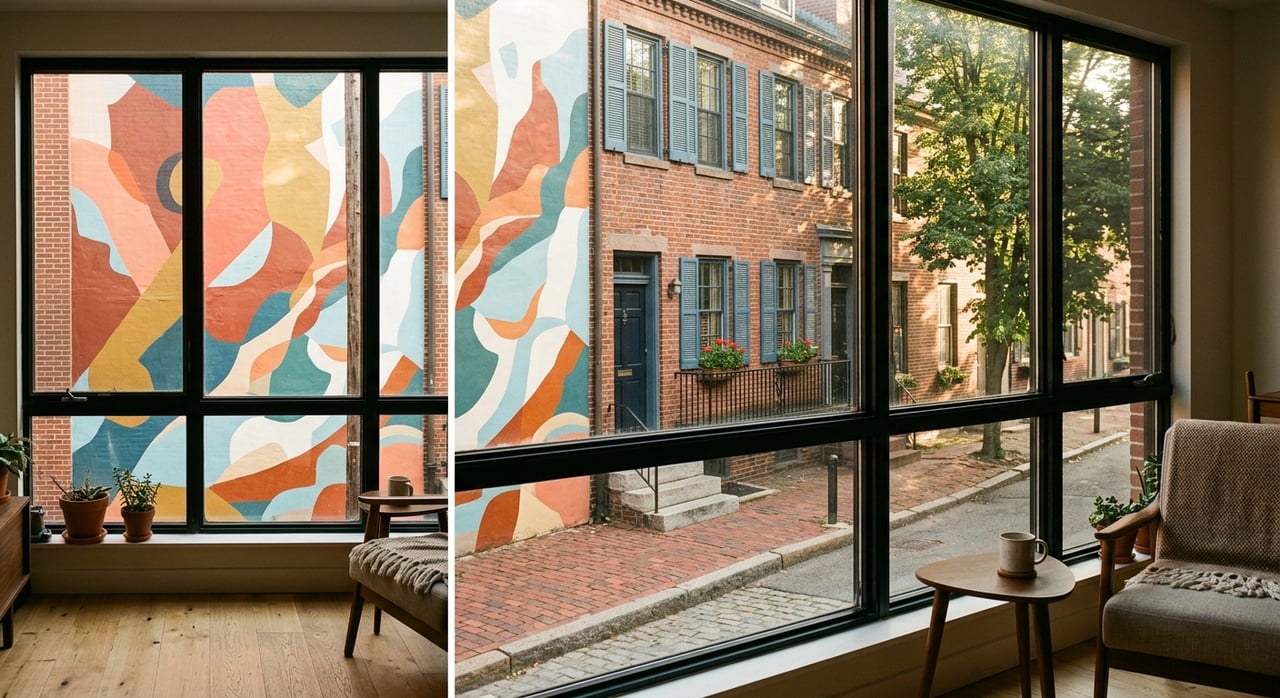
Ever walk through a neighborhood and feel like you understand it before you know its street names? If you are drawn to brick facades, ironwork, gallery windows, and blocks that unfold like a well-composed streetscape, the South End offers that kind of immediate connection. This guide gives you a visual orientation to South End, Boston so you can spot its defining patterns, understand how its architecture is preserved, and recognize the housing forms that matter if you are considering a move. Let’s dive in.
Why South End Feels So Distinct
The South End was built in the mid-19th century on filled tidal land along the Neck and developed as a planned rowhouse neighborhood. That origin still shapes how the area reads today, with a regular street grid, elegant townhouses, and a network of small parks.
Boston Planning describes the South End as the largest Victorian residential district in the United States. The neighborhood’s visual identity comes from cohesive 19th-century red brick rowhouses, along with churches and institutional buildings that break up the residential rhythm in a memorable way.
For design-minded buyers, that consistency is part of the appeal. You are not just looking at individual buildings. You are seeing a neighborhood where block patterns, facade details, stoops, and open space work together.
Start With the Main Streets
If you want to orient yourself quickly, focus on the main streets that define movement through the neighborhood. Washington Street, Tremont Street, Columbus Avenue, Massachusetts Avenue, Harrison Avenue, and Shawmut Avenue help explain how the South End functions on foot.
Tremont Street and Washington Street are key commercial corridors, with restaurants, galleries, and boutiques shaping the street experience. Shawmut Avenue is often noted for its tree-lined boutique feel, while Harrison Avenue becomes especially important once you move toward the SoWa arts and design cluster.
Washington Street also has historical significance because it follows the Neck, the narrow strip that once connected Boston to Roxbury. That layered history gives the South End a sense of structure that feels both planned and deeply rooted.
The Classic South End Squares
Some South End blocks feel iconic the moment you see them. If you want the clearest expression of the neighborhood’s residential character, start with the park-centered squares.
Union Park
Union Park is widely cited as one of the best-preserved residential squares in the South End. It is known for its trees, cast-iron fencing, and rows of bowfront and square-front bay windows facing the square.
For a buyer, this is where the South End’s visual language becomes easy to read. You see formal composition, strong symmetry, and the relationship between architecture and shared green space.
Chester Square and Worcester Square
Chester Square and Worcester Square were laid out in 1850 and 1851 as park-centered residential squares. Their rowhouses face central green space, and Worcester Square includes a fountain that reinforces the neighborhood’s garden-square tradition.
These blocks help explain why the South End can feel urban and graceful at the same time. The density is real, but it is organized around space, views, and a measured streetscape.
Blackstone and Franklin Squares
Blackstone and Franklin Squares are another essential part of a visual tour. Originally intended as one residential park called Columbia Square, they were completed as separate squares and still retain diagonal paths, fountains, tree canopy, and black iron fencing.
These details matter because they create the formal, composed look many buyers respond to immediately. In just a few blocks, you can see how the South End balances city energy with residential calm.
Where Art and Design Come Into Focus
If the residential squares show you the South End’s historic framework, SoWa shows you its creative energy. For anyone who values interiors, galleries, and design culture, this is one of the neighborhood’s clearest anchors.
SoWa on Harrison Avenue
SoWa is the South End’s most concentrated arts-and-design district. The area around 450 and 460 Harrison Avenue includes more than 20 galleries within a two-block radius, creating a dense and easy-to-read creative cluster.
First Fridays add another layer of visibility, with artists, galleries, shops, and showrooms open from 5 p.m. to 9 p.m. For buyers, that means the area is not just visually interesting. It supports an active design economy tied to how people live, browse, and furnish their homes.
SoWa Art + Design Center
The SoWa Art + Design Center at 500 Harrison Avenue is especially relevant if you think about real estate through a design lens. Its showrooms focus on furniture, rugs, antiques, kitchen design, flooring, and other home-design categories.
That matters because the South End is not just a place where architecture looks good from the sidewalk. It is also a place where design culture extends into interiors and everyday living.
Boston Center for the Arts
A second creative anchor sits around Tremont Street at the Boston Center for the Arts. Its South End campus supports working artists, offers studio residency space, and opens multiple artist buildings to the public during South End Open Studios.
This gives the neighborhood a deeper creative identity. Art in the South End is not only displayed here. It is also made, exhibited, and sold within the same broader walkable area.
What Buyers Should Notice in the Housing Stock
One of the biggest misconceptions about the South End is that it is only a neighborhood of brownstones or single residential building types. In reality, the housing stock has evolved over time and includes several forms layered into the historic fabric.
Boston Planning describes the neighborhood as a mix of historic brick townhomes and publicly funded housing. Historical sources also note that the area evolved away from purely single-family use, with boarding houses, lodging houses, later adaptations, and condominium buildings becoming part of the story.
For today’s buyer, that usually means three broad visual categories stand out.
Rowhouse Conversions
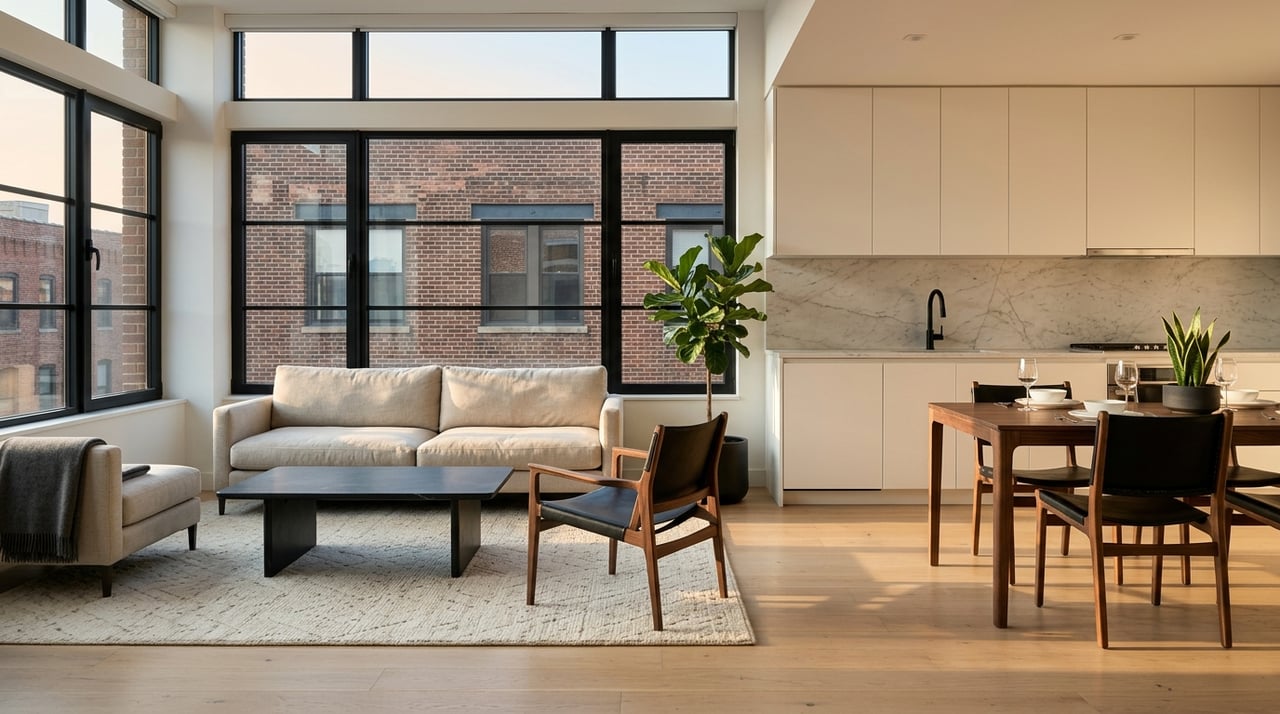
Many South End homes present as classic brick rowhouses that have been converted into condominiums. These are often the properties that best match the image many buyers already have in mind when they picture the neighborhood.
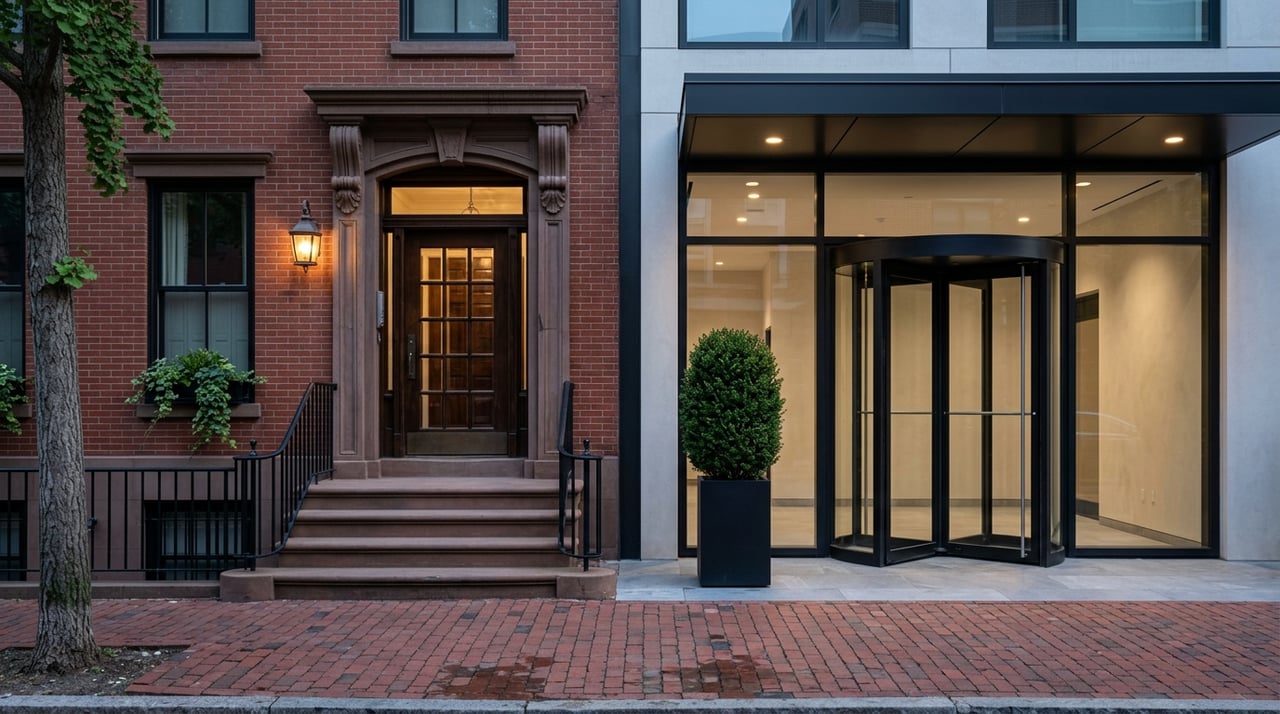
On park-centered streets, these homes often offer the strongest connection to the district’s Victorian character. Facades, stoops, railings, and entry sequences all contribute to the sense of place.
Adapted Historic Buildings
Some South End properties are historic buildings that have been adapted for multi-owner living. That can include buildings with different original uses that now function as condos while still contributing to the neighborhood’s overall visual rhythm.
For a design lover, this category is often about nuance. You may find details and proportions that differ from a standard rowhouse, but still feel deeply tied to the district’s character.
Reuse Near SoWa
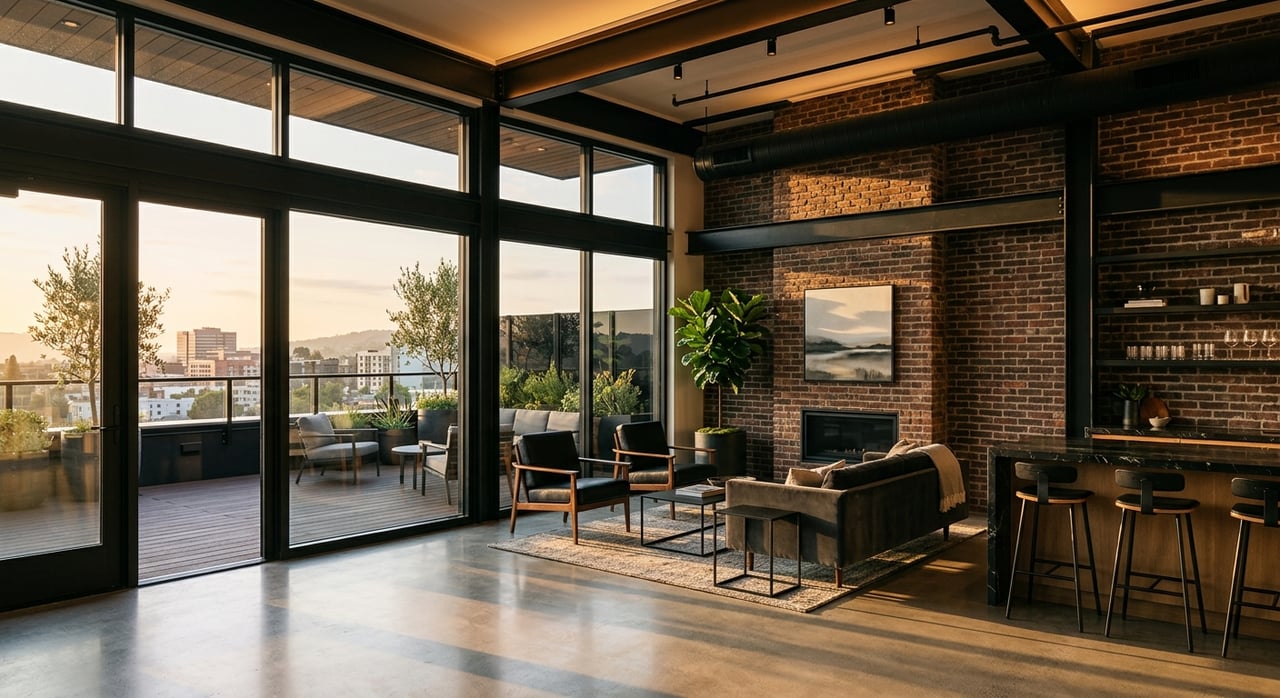
Around SoWa, you also see residential reuse connected to reclaimed industrial warehouse buildings. This creates a different expression of South End living, one that feels more loft-like and tied to the neighborhood’s art-and-design identity.
If you are comparing options, this is often where lifestyle and aesthetic preferences become especially important. Some buyers want the formal elegance of a park-facing rowhouse block, while others prefer the creative edge of warehouse reuse near galleries and design showrooms.
Why Preservation Matters to Buyers
In the South End, visual continuity is not accidental. The district was listed on the National Register of Historic Places in 1973 and designated a Boston Landmark District in 1983.
For buyers, the practical takeaway is clear: exterior alterations visible from public streets are reviewed by the South End Landmark District Commission. Rear walls are generally not reviewed unless they face a public street, and multi-owner buildings such as condominiums are treated uniformly when exterior changes are proposed.
This matters because the features people love most about the South End are often the very elements that receive attention under landmark standards. Street-facing facades, stoops, railings, entryways, and rooflines all help preserve the neighborhood’s visual identity.
It also affects how larger buildings fit into the streetscape. The standards expect new construction to echo the rhythm of the rowhouse block rather than feel monolithic, which helps maintain the scale that makes the South End so visually appealing.
How to Tour the South End Visually
If you want to understand the neighborhood before narrowing your home search, try viewing it in layers rather than all at once. That approach can make your search more focused and more useful.
Look for These Cues
- Park-centered blocks with formal green space
- Red brick rowhouses with consistent facade rhythm
- Iron fencing, stoops, and entry details
- Gallery clusters and showroom activity near Harrison Avenue
- Creative campus energy around Tremont Street
- A shift from formal residential squares to warehouse reuse near SoWa
As you walk, ask yourself what kind of visual setting feels most like home. The South End offers a range of experiences, but its best blocks always reveal a strong relationship between architecture, street pattern, and public space.
A Design-First Way to Evaluate South End Condos
When you are shopping in a visually rich neighborhood, price and square footage only tell part of the story. The better question is how a home fits into the block, the streetscape, and the version of South End living you want most.
That is especially true in a market where presentation and architectural context can shape value. Whether you are drawn to a classic rowhouse conversion, an adapted historic building, or a loft-like home near SoWa, it helps to work with an advisor who understands both design and execution.
If you want guidance that combines neighborhood perspective, visual positioning, and a meticulous process, Joe DeAngelo - New Website - SoWa offers a hands-on approach tailored to Boston’s design-driven condo market.
FAQs
What makes South End, Boston visually unique?
- South End stands out for its planned grid, Victorian red brick rowhouses, small parks, and a cohesive streetscape shaped by 19th-century architecture and preserved public-facing details.
Where are the most classic South End residential blocks?
- Union Park, Chester Square, Worcester Square, and the Blackstone and Franklin Squares are the most consistently cited examples of the neighborhood’s park-centered residential character.
Where is the art and design center of South End?
- The strongest art and design concentration is in SoWa around Harrison Avenue, with additional creative activity centered around the Boston Center for the Arts on Tremont Street.
Are South End buildings visually protected?
- Yes. Exterior changes visible from public streets are reviewed by the South End Landmark District Commission under the local landmark district standards.
Is South End housing only rowhouses?
- No. The housing stock includes rowhouse condo conversions, adapted historic buildings, lodging-house forms, and residential reuse connected to former industrial buildings near SoWa.
What should condo buyers notice when touring South End?
- Pay attention to the block pattern, facade rhythm, stoops, railings, park access, and whether you prefer the formal character of residential squares or the creative warehouse feel closer to SoWa.